
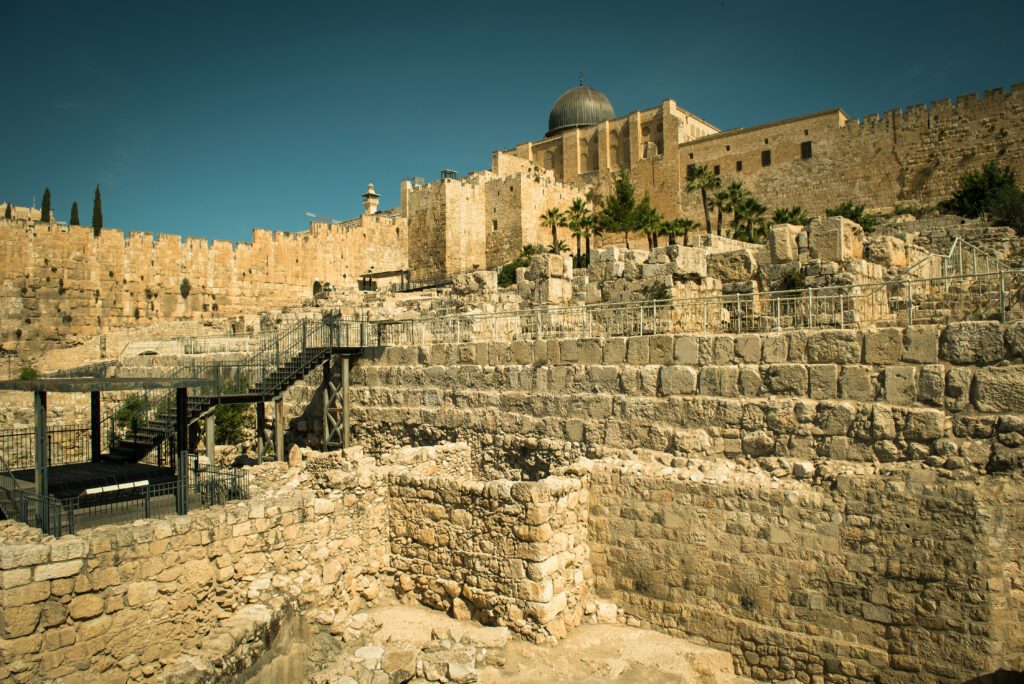
Understanding the Origins of Israel’s Historical Connection
The roots of Israel’s right to exist have historical connections to the land stretch back thousands of years, anchored in a tapestry of religious, cultural, and historical narratives. For millennia, the region known as Israel has been central to Jewish identity, tradition, and collective memory. Jewish presence in this territory is well-documented through ancient texts, archaeological findings, and continuous settlement, establishing an unbroken bond between the people and the land.
From the time of the biblical patriarchs—Abraham, Isaac, and Jacob—the land has held profound significance as the cradle of Jewish civilization. The establishment of the kingdoms of Israel and Judah, the construction of the First and Second Temples in Jerusalem, and the flourishing of Jewish culture and law all unfolded within this territory. Even after successive invasions, exiles, and foreign rule, Jewish communities persisted in cities like Jerusalem, Hebron, Safed, and Tiberias, sustaining religious practices and cultural traditions throughout the centuries.
This deep-rooted relationship is further reflected in Jewish prayer, literature, and rituals, which consistently reference the land of Israel as a focal point. The longing for return and restoration became a cornerstone of Jewish thought during periods of diaspora, underscoring the enduring nature of this historical bond. As such, Israel’s modern reestablishment resonates not merely as a political development but as the realization of an ancient connection, woven into the fabric of Jewish identity across generations.
Ancient Ties and Archaeological Evidence Supporting Israel’s Right
The foundation of Israel’s right to exist is deeply intertwined with the region’s ancient history, reinforced by a wealth of archaeological discoveries and historical documentation. Far from being a recent phenomenon, the connection between the Jewish people and the land of Israel stretches back thousands of years, forming an unbroken narrative of cultural, spiritual, and physical presence.
Historical Continuity Through Ancient Texts
Jewish ties to the land are chronicled in ancient texts such as the Hebrew Bible(Torah), which details the existence of the kingdoms of Israel and Judah. These records are not merely religious in context but are supported by independent sources from neighboring civilizations, including Egyptian, Assyrian, and Babylonian inscriptions that reference the Israelites and their settlements in the land.
Archaeological Discoveries
Archaeological excavations throughout modern-day Israel have unearthed significant artifacts attesting to Jewish life and governance in the region. Ruins of ancient synagogues, remnants of city walls, coins bearing Hebrew inscriptions, and relics from the First and Second Temples offer tangible proof of a continuous presence. Sites such as the City of David in Jerusalem and the fortress of Masada stand as enduring testaments to this historical bond.
- Inscriptions bearing the names of Israelite kings
- Pottery shards and seals dating back to biblical times
- Architectural remains of ancient Jewish communities
Together, these findings serve as compelling evidence that the Jewish people’s connection to the land is rooted in antiquity, reinforcing Israel’s legitimate historical claims and right to exist.
Key Historical Events Leading to Modern Israel’s Establishment
The establishment of modern Israel is rooted in a complex tapestry of historical events, each contributing to the foundation of the Jewish state. The late nineteenth century witnessed the rise of the Zionist movement, fueled by growing persecution of Jews in Eastern Europe and the desire to return to their ancestral homeland. The First Zionist Congress, held in Basel in 1897, marked a pivotal moment, formally articulating the aspiration for a Jewish homeland in the region. This momentum gained global recognition with the issuance of the Balfour Declaration in 1917, where the British government expressed support for “the establishment in Palestine of a national home for the Jewish people.”
Following World War I, Britain assumed control of Palestine under the League of Nations Mandate, tasked with implementing the declaration’s objectives while safeguarding the rights of existing non-Jewish communities. Jewish immigration steadily increased throughout the 1920s and 1930s, spurred by mounting anti-Semitism in Europe and culminating in a demographic transformation of the region. Tensions between Jewish and Arab inhabitants intensified, leading to periodic outbreaks of violence and shaping British policy toward the territory.
The aftermath of the Holocaust underscored the urgent need for a Jewish refuge, prompting the United Nations in 1947 to propose a partition plan dividing Palestine into separate Jewish and Arab states. Despite fierce opposition and ensuing conflict, Israel declared its independence on May 14, 1948, marking the culmination of decades of struggle, diplomacy, and perseverance. This sequence of events underscores the historical legitimacy of Israel’s right to exist and the enduring connection between the Jewish people and their ancestral land.
International Recognition and Legal Foundations of Israel’s Existence
The modern State of Israel’s right to exist is grounded in a robust framework of international recognition and legal precedent. Its establishment in 1948 was not an isolated act but the culmination of decades of diplomatic negotiations and formal agreements, reflecting the will of the global community at that time. The legitimacy of Israel as a sovereign nation is rooted in key documents and resolutions that have shaped international law and the geopolitical landscape of the Middle East.
Central to Israel’s legal foundation is the Balfour Declaration of 1917, in which the British government expressed support for the establishment of a “national home for the Jewish people” in Palestine. This landmark statement was later endorsed by the League of Nations through the Mandate for Palestine in 1922, which officially recognized the historical connection of the Jewish people to the land and called for facilitating Jewish immigration and settlement.
The most definitive act of international recognition occurred with the adoption of United Nations General Assembly Resolution 181 in 1947. This resolution recommended the partition of the British Mandate of Palestine into independent Arab and Jewish states, providing a legal basis for Israel’s declaration of independence on May 14, 1948.
Following its declaration, Israel was swiftly recognized by numerous nations, including the United States and the Soviet Union, and was admitted to the United Nations in 1949. These milestones collectively affirm Israel’s legal status as a sovereign nation, anchored in both international law and global consensus.
Addressing Common Misconceptions About Israel’s Historic Right to the Land
The debate over Israel’s right to exist and its historic connection to the land is often clouded by pervasive misconceptions. Many narratives overlook centuries of continuous Jewish presence and the multifaceted history that ties the Jewish people to this region. Understanding the roots of these misconceptions is crucial for fostering informed dialogue and dispelling myths that hinder peace and mutual respect.
Disentangling Historical Narratives
One widespread misconception is that Jewish claims to the land are solely a product of modern political movements. In reality, Jewish ties to the land of Israel date back thousands of years, with religious, cultural, and historical significance traced through ancient texts and archaeological evidence. The land, known as Eretz Yisrael in Hebrew, has been central to Jewish identity since biblical times. Even during periods of exile and diaspora, Jewish communities maintained their presence and connection through pilgrimage, prayer, and communal life.
Understanding Legal and International Recognition
Another common belief is that Israel’s establishment lacked international legitimacy. However, the legal foundation for Israel’s statehood is rooted in international agreements and declarations, such as the Balfour Declaration of 1917 and the League of Nations Mandate for Palestine. These documents recognized the historical connection of the Jewish people to the land and endorsed the establishment of a national home.
Clarifying these misconceptions allows for a more nuanced understanding of the Israeli-Palestinian conflict, setting the stage for a balanced exploration of historical land claims and modern realities.